One professional, built from many disciplines.
I did not arrive at intellectual property and technology through a single degree. I arrived through mathematics, then commerce, then law, then teaching, then research — and that long route is exactly what lets me read hard problems from several sides at once.
My foundation is quantitative. I hold a B.Sc. in Mathematics (Honours) on a Physics–Chemistry–Mathematics base, with foundational familiarity in biology and biotechnology. That training gave me something that has mattered in every role since: comfort with formalism, algorithmic reasoning and the patience to read a technical argument until it actually makes sense.
From there I moved into commerce and the professional-law world. I completed an M.Com, cleared modules of CS Executive and CS Professional from ICSI, finished the first semester of an LL.B., and am now pursuing an MBA in International Business. In December 2025 I qualified UGC NET in Commerce for both Assistant Professor and Ph.D. eligibility. These are not certificates collected for show — each one deepened a different muscle: statutory reading, commercial reasoning, research method.
For more than twelve years I taught Business Law, Corporate Law, Industrial and Labour Law, Drafting and Taxation to CA, CS and CMA aspirants in New Delhi and Darbhanga, including a tenure as Centre Manager. Teaching at that level forces a particular discipline: break a problem into its elements, explain the reasoning, and document every step so someone else can follow it. Alongside, as Designated Partner of a corporate-legal LLP, I did the live work too — agreements, deeds, ROC filings, board documentation, statutory correspondence.
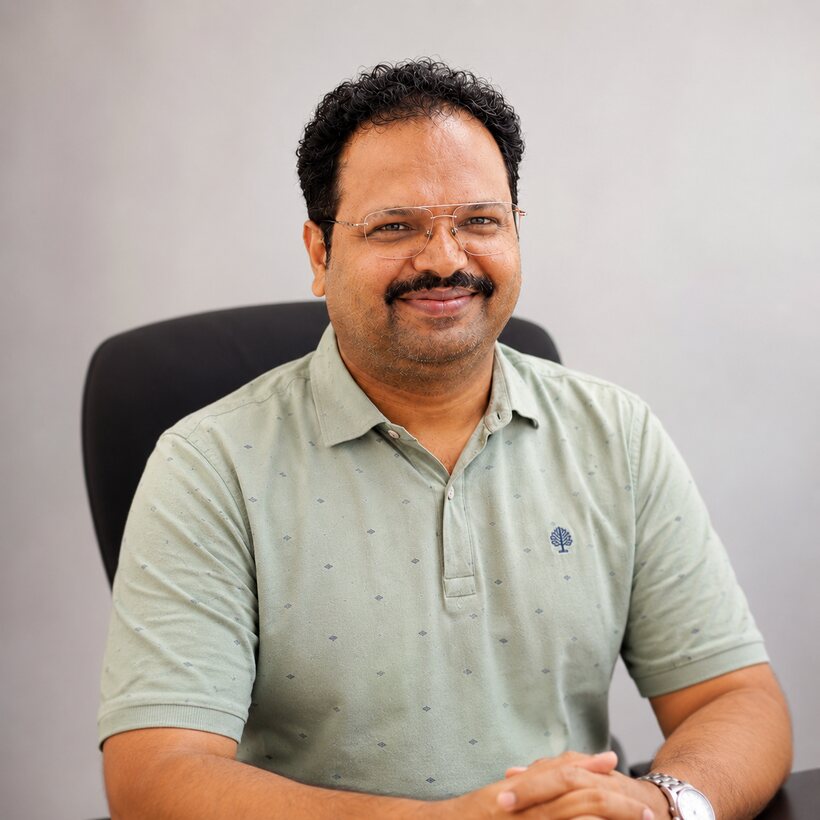
At a glance
The short version
- Mathematics (Hons.) · science foundation
- M.Com · MBA (Int'l Business, in progress)
- UGC NET — Assistant Professor & Ph.D.
- WIPO Academy certified (3 courses)
- CS Professional (IPR) · LL.B. Sem 1
- 3 chapters accepted · IGI Global, USA
Where commerce, code and law converge.
Somewhere along the way, the most interesting problems I kept meeting were technological ones with legal and commercial consequences. So I built that capability deliberately. I developed a working understanding of software architecture and application-development concepts, applied AI and machine-learning tooling, and India's digital public infrastructure — UPI, e-Rupee / CBDC, GSTN, e-invoicing, the Account Aggregator framework and DigiLocker. That same systems-thinking produced my flagship research framework, the Universal Transaction Accountability Framework (UTAF) and its proposed Unified Invoice Interface.
The intellectual-property field is where all of this comes together. I now work as a patent, trademark and IP-commercialization analyst with a particular focus on software, AI and fintech, comfortable across USPTO, EPO and WIPO / PCT procedure — WIPO Academy certified — with my deepest fluency in the Indian framework. I read a specification with technical comprehension, reason about it with legal training, and weigh its commercial potential with a businessperson's eye.
I would rather be the one accountable person who understands the whole problem than one specialist who only sees a slice of it.

Reading, thinking, and rebuilding systems from first principles.
An honest note on positioning. I am not a registered patent agent or a practising advocate — I have cleared LL.B. Semester 1 and CS modules, hold WIPO Academy certifications, and am preparing for the Indian Patent Agent (CGPDTM) examination. My work is therefore in non-agent analyst and support roles, with legal opinions and representation left to qualified counsel. On the technology side, my strength is architecture, systems design and reading code and specifications across the stack — not competing with a senior production engineer on raw output. I state this plainly because credibility, not exaggeration, is what earns trust.
Principles I hold to.
Honesty over hype
I would rather under-claim and over-deliver. Every credential here is real and every limit is stated. That is what lets a client or employer trust the rest.
Structure first
I diagnose the structure of a problem before proposing a fix — whether it is a patent claim, a fiscal system or a syllabus. Patch later; understand first.
Write it down clearly
Years of teaching taught me that work that cannot be explained simply is not finished. Documentation and clarity are part of the deliverable, not an afterthought.